DREAMS · SYMBOLS · REFLECTION
What Does It Mean to Dream About Snakes?
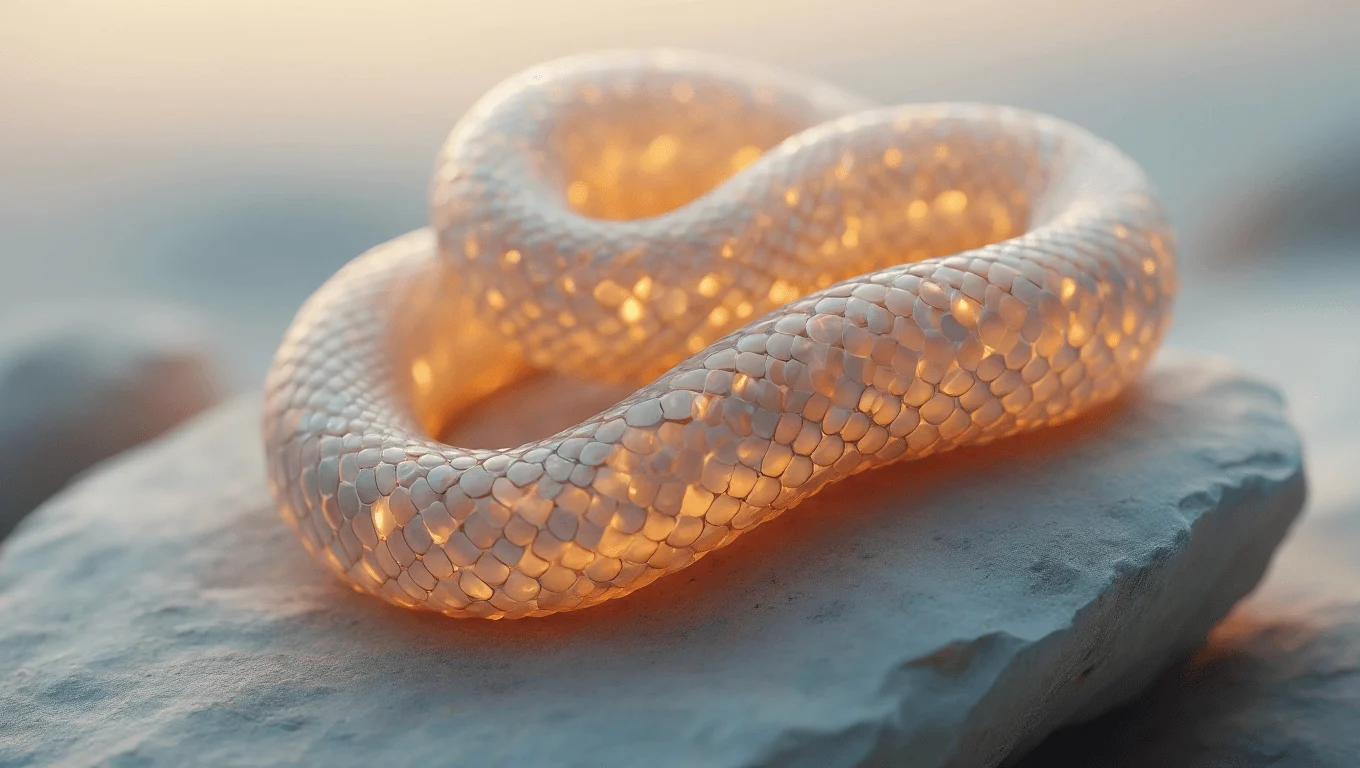
Snakes are one of the most common — and emotionally charged — symbols in dreams. You might dream of a snake coiled in the corner of a room, slithering toward you, biting you, or simply watching. Sometimes there’s one snake. Sometimes there are dozens.
Snake dreams tend to be vivid and hard to shake. They feel significant, often unsettling, and you wake up wanting to know what that was about.
The useful answer is not one fixed meaning.
Snakes carry a lot of cultural weight — fear, danger, healing, sexuality, transformation, betrayal. But none of those meanings should be applied automatically. The better question is: what was the snake doing, what were you doing, and what did it feel like?
That is where interpretation gets real.
Why Snakes Show Up in Dreams
Snakes appear so often because they already carry emotional charge before the dream even begins.
For some people, snakes trigger immediate fear. For others, they suggest transformation, instinct, or danger hiding in plain sight. The symbol arrives loaded.
Psychologically, snake dreams often cluster around a few themes:
fear or threat
something hidden
change or shedding
instinct or primal energy
betrayal, distrust, or toxicity
But your snake is not everyone else’s snake.
Someone who fears snakes deeply will dream them differently than someone who finds them beautiful. A snake bite is different from a snake shedding its skin. A snake in your home is different from a snake crossing your path outside.
The context matters more than the symbol’s reputation.
Common Snake Dream Scenarios
Being bitten by a snake
This often reflects a sense of emotional threat, pain, betrayal, or something “toxic” getting too close.
Questions to ask:
Who or whatfeels dangerous right now?
Do I feel hurt, exposed, or on edge?
Is there something I know is harming me but I haven’t fully admitted it?
A snake chasing or attacking you
This usually points toward avoidance.
A snake pursuing you often reflects something in waking life that you do not want to face — fear, conflict, pressure, a difficult truth, an unresolved feeling.
Questions to ask:
What am I avoiding?
What feels like it keeps catching up to me?
What would happen if I stopped running from it?
Multiple snakes
Dreams with many snakes often reflect emotional overload, multiple stressors, or the feeling that too many threats or unresolved issues are active at once.
Questions to ask:
What feels like too much right now?
Where am I overwhelmed?
Is my stress coming from one issue or many at once?
Killing a snake
This can reflect overcoming something, defending yourself, ending a toxic dynamic, or trying to suppress something before understanding it.
Questions to ask:
What am I trying to get rid of?
Did I recently set a boundary or end something unhealthy?
Am I confronting a problem — or trying to silence it too fast?
A snake shedding its skin
This is one of the clearest transformation symbols in snake dreams.
It often points toward transition, growth, or the process of leaving behind an older version of yourself.
Questions to ask:
What am I outgrowing?
What no longer fits who I’m becoming?
What change feels uncomfortable, but necessary?
A calm or non-threatening snake
Not all snake dreams are about danger.
A calm snake can suggest instinct, self-trust, primal intelligence, or a hidden part of yourself that is becoming less frightening.
Questions to ask:
What am I becoming less afraid of?
Is there a part of me I’m learning to trust?
What if this isn’t a threat, but a signal to pay attention?
A snake inside your house
This often feels invasive for a reason.
Home in dreams usually connects to inner life, safety, or personal boundaries. A snake in your house may reflect something disruptive entering a place that should feel secure.
Questions to ask:
What feels invasive in my life right now?
Where do I not feel safe or settled?
What has crossed a boundary recently?
How to Interpret Your Snake Dream
The best interpretation starts with your own reaction.
Start with the feeling
Did the dream feel:
terrifying?
disgusting?
tense?
fascinating?
calm?
strangely neutral?
The emotional tone matters more than abstract symbolism.
Then look at the snake’s role
Ask:
Was it attacking?
Hiding?
Watching?
Shedding?
Existing peacefully?
The snake’s behavior usually tells you more than the fact that it was a snake.
Then connect it to waking life
What in your life currently feels like:
hidden danger?
emotional tension?
transformation?
distrust?
instinct you haven’t listened to yet?
Snake dreams become much more useful when connected back to real emotional context.
What Snake Dreams Usually Don’t Mean
Snake dreams do not automatically mean:
danger is coming
someone is betraying you
you are spiritually awakening
something mystical is happening to you
Sometimes the internet will try to push snake dreams into one rigid frame.
That usually makes the dream less useful, not more.
A better approach is to stay neutral and curious.
What To Do After a Snake Dream
Write it down
Capture:
what the snake looked like
what it was doing
what you were doing
how you felt
what’s happening in your life rightnow
Notice repetition
If snake dreams return more than once, that matters.
Recurring symbols often point to themes that are still active.
Ask better questions
Instead of “what do snakes mean in dreams?” try:
what did this snake feel like?
what in my life has this same emotional texture?
what am I not fully facing?
what might be changing in me right now?
Do not panic
Snake dreams are intense, but they are rarely literal warnings.
More often, they are emotional processing using a symbol that already has strong charge.
The Bottom Line
Snake dreams are powerful because snakes are powerful symbols.
But the meaning is not in a dictionary.
It is in the relationship between:
the snake
your reaction
the emotional tone
the context of your waking life
Fear, fascination, change, betrayal, instinct — all are possible. None should be assumed automatically.
The meaning isn’t in a dictionary. It’s in your patterns. Surelity helps you track recurring symbols and find what they mean to you.